The True Cost of Borrowing for College: Fees, Capitalization & Lifetime Math (2026)
📌 Key Takeaways & Executive Summary
- Beyond Sticker Price: The true cost of borrowing incorporates origination fees (up to 4.228%), daily interest compounding, and capitalized charges.
- Lifetime Repayment Multiplier: Under standard 10-year amortization, every $1.00 borrowed typically requires $1.35 to $1.65 in total repayment.
- Delayed Wealth Accumulation: Funneling $450/month into student debt instead of retirement index funds costs over $350,000 in compound investment growth.
- Fee Mechanics: Federal loan origination fees are withheld upfront, reducing net cash disbursed while increasing your starting legal promissory balance.
When colleges publish their annual Cost of Attendance (COA), prospective students and families see straightforward numbers: tuition, room, board, and textbooks. If the balance after grants is $30,000, students often assume that borrowing $30,000 will simply cost $30,000 to repay.
This is the central financial misconception of higher education. Between upfront loan origination fees, in-school daily interest accumulation, capitalization penalties, and lost investment compounding, the true cost of borrowing is dramatically higher than the sticker price on your financial aid award letter.
1. The Four Layers of True Borrowing Cost
Layer 1: Upfront Origination Fees
The federal government deducts a mandatory administrative loan origination fee from every loan disbursement before funds reach your bursar:
- Direct Subsidized & Unsubsidized Loans: 1.057% fee deducted upfront.
- Direct Parent PLUS & Grad PLUS Loans: 4.228% fee deducted upfront.
If parents borrow $30,000 in Parent PLUS loans, the government deducts $1,268.40 immediately. The school receives only $28,731.60, but the parents owe the full $30,000 plus interest from day one!
Layer 2: In-School Interest Capitalization
Unless your loans are Direct Subsidized, interest begins compiling the exact afternoon funds are wired. Over four years of college, an unserviced $35,000 debt generates roughly $6,000 to $8,000 in accrued interest. At graduation, that sum capitalizes into principal, increasing your baseline debt.
Layer 3: 10-Year Amortization Interest Overhead
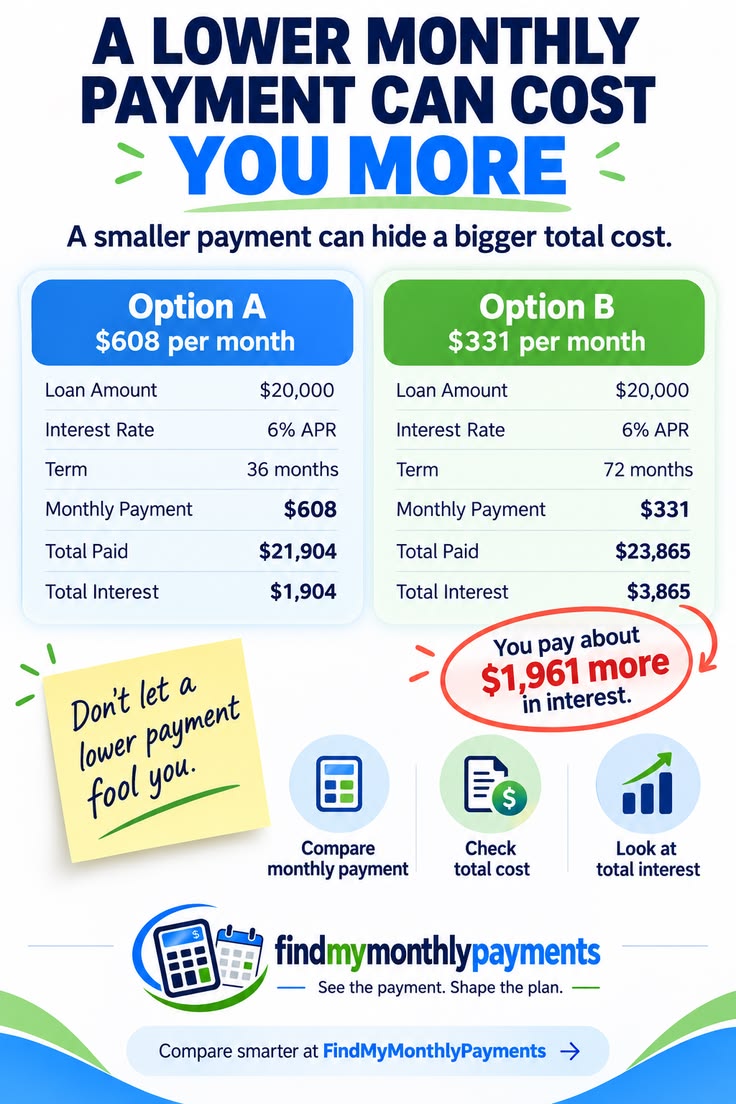
Once active repayment commences, a standard 10-year term at 6.8% adds another 38% to 45% in pure interest expenses on top of the original disbursed balance.
Layer 4: The Massive Opportunity Cost of Delayed Investing
The ultimate hidden cost of student debt is what that money could have earned if invested in index funds. Funneling $500 per month toward student loans for 10 years consumes $60,000 in cash. Had that same $500/month been invested in a broad-market index fund compounding at 8.5% over 30 years, it would have grown to over $412,000!
2. True Cost Breakdown: $40,000 Disbursed Example
Review this comprehensive audit of what borrowing $40,000 actually costs a student over their lifetime:
| Cost Component | Nominal Figure | Actual Financial Impact |
|---|---|---|
| Net Cash Needed for College | $40,000.00 | Actual cash disbursed to bursar. |
| Federal Origination Fees | $427.50 | Deducted upfront; added to debt balance. |
| 4-Year In-School Accrued Interest | $6,140.00 | Capitalizes into principal upon graduation. |
| Starting Principal Balance | $46,567.50 | The enlarged baseline that amortizes over 10 years. |
| 10-Year Repayment Interest (6.8%) | $17,742.20 | Paid to loan servicer across 120 payments. |
| Total Lifetime Cash Repaid | $64,309.70 | $1.61 repaid for every $1.00 borrowed! |
3. Frequently Asked Questions (FAQ)
Do private student loans charge origination fees?
Most competitive online private student lenders (such as SoFi, Earnest, and Discover) charge 0% origination fees. However, their interest rates are risk-based and dependent upon your co-signer's credit profile.
How can I minimize the true cost of borrowing?
To slash true borrowing costs: borrow Direct Subsidized loans first, pay accrued interest while attending college to prevent capitalization, enroll in autopay for a 0.25% discount, and execute accelerated principal prepayments.
Why do Parent PLUS loans have higher origination fees?
Congress established the statutory 4.228% fee under federal budget reconciliation laws to offset government administrative and default costs associated with PLUS loans, which feature higher aggregate borrowing maximums.

Written by Marcus Vance, CFP®®
✓ Fact-Checked & ReviewedLead Financial Aid & Student Debt Strategist
Marcus Vance is a Certified Financial Planner (CFP®®) specializing in higher education financing, federal loan restructuring, and student loan repayment optimization. He has analyzed hundreds of student debt portfolios to help graduates minimize interest and achieve debt freedom.