How Student Loans Work: Complete Guide to Borrowing, Interest & Repayment (2026)
📌 Key Takeaways & Executive Summary
- Principal vs. Interest: Your principal is the baseline sum borrowed; interest is the financial fee charged by lenders computed via a daily interest factor.
- Disbursement Mechanics: Loan funds never enter your pocket first; they are wired directly to your university bursar's office to settle tuition, fees, and campus board before any refund check is issued.
- The 6-Month Grace Buffer: Federal loans and reputable private loans grant a 180-day grace period post-graduation, but unsubsidized balances continuously accumulate interest throughout this pause.
- Amortization Rule: Early monthly payments overwhelmingly service accrued interest; principal reduction accelerates exponentially only during the second half of your loan tenure.
Higher education remains one of the most substantial financial investments an individual can make. For the vast majority of students across the United States, personal savings and family contributions are insufficient to bridge the tuition gap, necessitating student loans. However, signing a Master Promissory Note (MPN) without grasping the underlying financial architecture can transform a manageable education expense into decades of unyielding financial strain.
In this comprehensive guide, we dissect the inner mechanics of student debt: from initial application and school-certified disbursement to daily interest compounding, capitalization triggers, and long-term payoff timelines.
1. The Core Lifecycle of a Student Loan
Every student loan follows a structured lifecycle governed by federal guidelines or private credit agreements. Navigating this cycle effectively prevents unexpected balance spikes and missed payments.
| Stage | What Occurs | Financial Implication |
|---|---|---|
| 1. Origination | FAFSA submission or private credit application; loan approved and promissory note executed. | Federal loans deduct an origination fee (approx. 1.057% for Direct Sub/Unsub). |
| 2. Disbursement | Lender sends payments directly to your college bursar each semester. | Tuition and fees are deducted first; leftover balances are refunded for textbooks and living. |
| 3. In-School Deferment | Borrower is enrolled at least half-time (6+ credits). No mandatory payments required. | Subsidized loans remain interest-free; Unsubsidized & private loans accrue interest daily. |
| 4. Grace Period | 6-month window immediately following graduation, withdrawal, or dropping below half-time. | Final opportunity to prepay accrued interest before it capitalizes into the principal balance. |
| 5. Active Repayment | Monthly installments commence under Standard (10-year), Extended, or IDR plans. | Payments are split between interest accrued that month and underlying principal. |
| 6. Payoff or Forgiveness | Loan balance reaches $0 via aggressive payments or qualifying forgiveness (e.g. PSLF). | Debt obligations fully terminated; servicer issues an official Paid-in-Full letter. |
2. How Student Loan Interest Really Works: The Exact Math
Unlike mortgages or standard auto financing which calculate interest on an end-of-month amortized balance, student loans generally operate on a Simple Daily Interest system. This means interest accumulates every single day between payments.
To determine how much interest accumulates on your loan balance each day, lenders use the Daily Interest Formula:
Monthly Accrued Interest = Daily Interest Factor × Number of Days in Billing Cycle
💡 Real-World Math Example
Assume you hold $35,000 in Unsubsidized Federal Student Loans at a fixed interest rate of 6.53%.
• Daily Interest = ($35,000 × 0.0653) ÷ 365 = $6.26 per day.
• In a 31-day month, your balance generates $194.06 in interest charges regardless of whether you pay or defer.
• Over a 4-year degree (1,460 days), an unserviced $35,000 loan generates over $9,139 in raw interest before day one of repayment!
3. Subsidized vs. Unsubsidized Federal Loans: Crucial Contrast
The distinction between Direct Subsidized and Direct Unsubsidized loans is the most pivotal factor in managing collegiate debt growth:
- Direct Subsidized Loans: Reserved strictly for undergraduate students displaying verified financial need (determined via FAFSA). The U.S. Federal Government acts as your financial benefactor by paying 100% of the interest that accumulates while you are in school, during your 6-month post-grad grace period, and throughout approved deferment periods.
- Direct Unsubsidized Loans: Available to both undergraduate and graduate students regardless of financial need. Interest begins compounding immediately from the exact moment funds transfer to your school. If you do not pay this interest as it accrues, it will be capitalized (added to your principal balance) when your grace period concludes.
4. What Is Interest Capitalization and Why Does It Hurt Borrowers?
Interest capitalization occurs when unpaid accrued interest is formally added to your principal balance. Subsequent interest is then calculated on this new, enlarged figure—forcing you to pay interest on interest.
Capitalization events typically occur when:
- Your 6-month post-college grace period expires.
- You exit a period of forbearance or non-qualified deferment.
- You leave an Income-Driven Repayment (IDR) plan or fail to recertify your annual income on time.
5. How Monthly Payments Are Distributed (Waterfall Allocation)
When you submit a payment to your student loan servicer (such as Nelnet, MOHELA, Aidvantage, or ECSI), the payment is legally apportioned across three distinct buckets in a strict priority sequence:
- Outstanding Fees & Penalties: Any late fees or administrative charges must be paid first.
- Accrued Interest: All interest accumulated between your previous payment and the current date must be fully satisfied.
- Principal Balance: Only the residual funds remaining after fees and interest are deducted will reduce your actual principal balance.
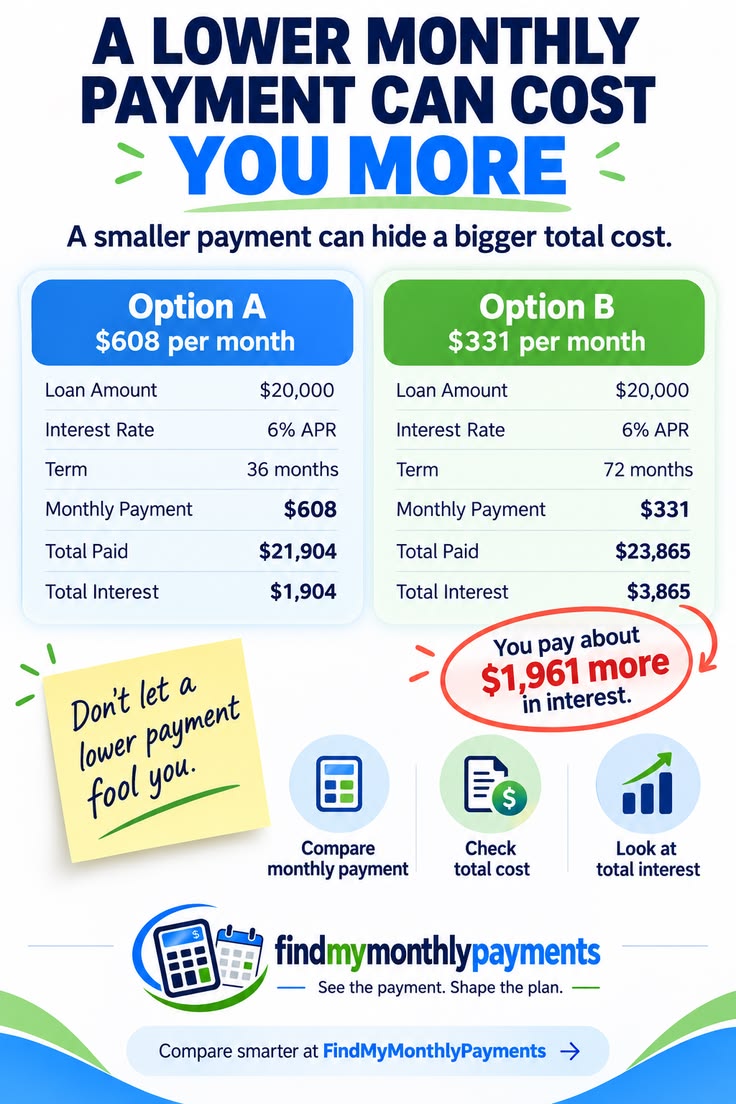
This fundamental rule explains why borrowers on low-payment plans often feel their loan balance refuses to shrink: if your monthly bill only covers interest, your principal never decreases by even one cent.
6. Strategic Payoff: How to Beat the Amortization Curve
You can aggressively lower total loan cost by adopting three verified debt-reduction tactics:
- Pay Interest in School: Sending just $50 to $100 per month while enrolled prevents interest capitalization at graduation, saving hundreds in compound charges.
- Set Up Auto-Debit (ACH): Most federal and private loan servicers offer a 0.25% interest rate discount immediately upon enrolling in automatic recurring payments.
- Apply Target Principal Payments: When paying extra funds, explicitly instruct your loan servicer in writing or online portal to apply surplus amounts directly to the loan with the highest interest rate (the Debt Avalanche method), not toward future billing cycles.
7. Frequently Asked Questions (FAQ)
Can I pay off my student loan early without penalty?
Yes! Federal law strictly prohibits prepayment penalties on all federal and private student loans in the United States. You have the legal right to pay extra or satisfy your loan in full at any time without fee or restriction.
What happens if I cannot afford my monthly loan payments?
If you hold federal student loans, immediately apply for an Income-Driven Repayment (IDR) plan like SAVE or IBR, which can lower your monthly payment to as low as $0 depending on your income. Do not simply stop paying, as missing payments damages your credit score after 90 days.
How do loan servicers differ from lenders?
A lender originates the funds (e.g. the U.S. Department of Education). A loan servicer is an assigned contractor (e.g., Nelnet, MOHELA, Aidvantage) responsible for collecting monthly billing, administering repayment programs, and providing customer support.

Written by Marcus Vance, CFP®®
✓ Fact-Checked & ReviewedLead Financial Aid & Student Debt Strategist
Marcus Vance is a Certified Financial Planner (CFP®®) specializing in higher education financing, federal loan restructuring, and student loan repayment optimization. He has analyzed hundreds of student debt portfolios to help graduates minimize interest and achieve debt freedom.