Parent PLUS Loan Double Consolidation Loophole: 2026 Rules & Step-by-Step Guide
Parent PLUS loans represent one of the most punitive borrowing categories in the entire federal financial aid portfolio. Carrying the highest interest rates among federal loans, non-trivial origination fees exceeding 4%, and zero borrowing caps up to the school's total cost of attendance, Parent PLUS debt has pushed hundreds of thousands of American families toward financial distress.
Making matters worse, Parent PLUS loans are legally barred from almost every generous Income-Driven Repayment (IDR) plan. By default, a parent who consolidates PLUS loans is relegated to Income-Contingent Repayment (ICR)—a harsh repayment plan that requires 20% of discretionary income. However, through a recognized regulatory mechanism known as the Double Consolidation Loophole, savvy borrowers have successfully transformed Parent PLUS debt into standard Direct Consolidation debt, unlocking payment cuts of 50% to 70%.
Regulatory Mechanism: 34 CFR § 685.209 Explained
Under federal regulations, when a Direct Consolidation loan repays a Direct Parent PLUS loan, the resulting loan is restricted to ICR. However, when a Direct Consolidation loan repays two consolidation loans (which themselves repaid PLUS loans), federal servicer database coding strips the direct Parent PLUS flag from the final note, legally qualifying the final note for standard income-driven repayment plans.
1. Financial Comparison: ICR vs. Unlocked IDR
To understand why this strategy is so widely pursued, consider a retired parent borrower earning an adjusted gross income (AGI) of $68,000 with a family size of 2, holding $110,000 in Parent PLUS loans at 7.5% interest:
| Repayment Plan | Calculation Formula | Estimated Monthly Payment |
|---|---|---|
| Standard 10-Year Plan | 10-year fixed amortization | $1,306 / month |
| Single Consolidation (ICR) | 20% of discretionary income (> 100% poverty level) | $787 / month |
| Double Consolidation (Unlocked IDR) | 10% of discretionary income (> 150% poverty level) | $311 / month |
In this realistic scenario, completing the double consolidation process saves the parent borrower over $476 each month—accumulating to over $5,700 in annual cash flow relief.
2. Eligibility Prerequisites: Can You Execute This?
Before launching the multi-step paperwork, verify your portfolio meets the mandatory prerequisites:
- Minimum Loan Count: You must have at least two separate federal loans. This can be two Parent PLUS loans, or one Parent PLUS loan and one personal federal student loan (Direct or FFEL) taken out for your own prior education.
- Parent Borrower Entity: All loans must be in the parent's legal name and Social Security Number. You cannot combine a student's Direct Loan with a parent's PLUS loan into a single consolidation.
- Current Default Status: Loans must be in good standing or deferment/forbearance. Defaulted Parent PLUS loans must be rehabilitated or cured before attempting this procedure.
3. The 4-Phase Execution Blueprint
The double consolidation sequence requires precise execution across multiple loan servicers. Follow this step-by-step workflow:
Phase 1: Divide Loans into Two Groups
Separate your Parent PLUS loans into Group A and Group B. Ensure balanced distribution so each group contains at least one loan note.
Phase 2: Submit Two Paper Applications to Two Separate Servicers
Do NOT use the online StudentAid.gov application for Phase 2. You must download and print two physical paper Direct Consolidation Loan Application and Promissory Note packages.
- Application 1 (Group A): Mail to Servicer #1 (e.g., Nelnet). Select the Standard or Graduated Repayment plan for now.
- Application 2 (Group B): Mail to Servicer #2 (e.g., Aidvantage). Select the Standard or Graduated Repayment plan.
- Send both application packages via USPS Certified Mail with Return Receipt Requested to document postmark dates.
Phase 3: Verify Initial Funding & Servicing
Over the next 6 to 10 weeks, both servicers will process your packages. You will receive 10-day cancellation notices and final funding notices. You now hold two independent Direct Consolidation loans.
Phase 4: The Final Master Consolidation to a Third Servicer
Once both initial loans appear as funded on your StudentAid.gov dashboard:
- Submit a final Direct Consolidation application (either online via StudentAid.gov or via paper) combining Consolidation Loan A and Consolidation Loan B.
- Route this final application to a third servicer (e.g., MOHELA or Edfinancial). If you are pursuing Public Service Loan Forgiveness (PSLF), route this final loan directly to MOHELA.
- Select your desired Income-Driven Repayment plan on this final application. Because the underlying notes are now two consolidation loans rather than direct PLUS notes, the processing logic approves standard IDR calculations.
4. Crucial Pitfalls & Risk Mitigation
- Sending Both Phase 2 Applications to the Same Servicer: If Aidvantage receives both Group A and Group B, their internal systems will merge them into a single consolidation, irreversibly locking the balance into ICR.
- Applying Online for Phase 2: The online StudentAid.gov portal only permits one pending consolidation application at a time. Submitting the first phase online blocks the concurrent submission of your second group.
- Tax Implications: While IDR reduces monthly burdens, remember that under federal tax law, non-PSLF loan forgiveness granted after 2025 may become subject to federal income taxation unless Congress extends the American Rescue Plan exclusion.
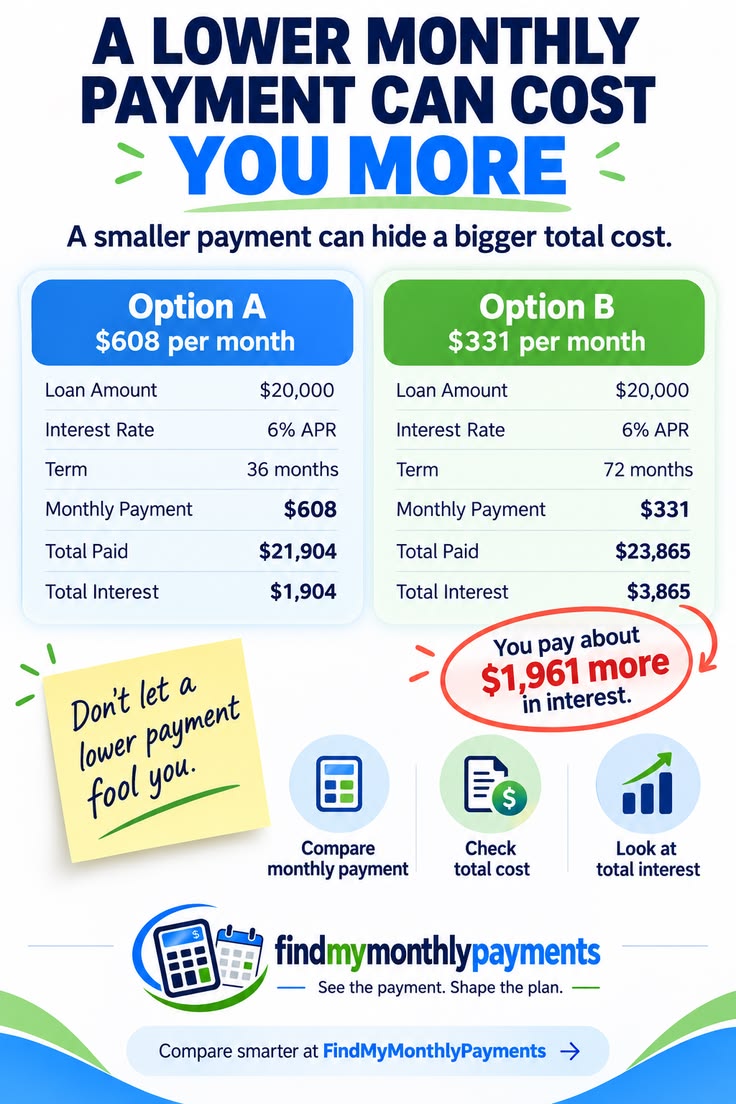
Simulate Loan Amortization & Repayment Costs
Understand how different monthly payment amounts and payoff horizons affect total cumulative interest costs over the lifetime of your family's student loans.
Frequently Asked Questions (Parent PLUS 2026)
Q: Why are Parent PLUS loans restricted from most Income-Driven Repayment (IDR) plans?
By federal statute (34 CFR § 685.209), Direct Parent PLUS loans are legally disqualified from all standard IDR plans. If consolidated normally once, they only unlock Income-Contingent Repayment (ICR), which requires a steep 20% of discretionary income.
Q: What is the Parent PLUS Double Consolidation loophole?
Double Consolidation is a multi-step administrative process where a parent consolidates multiple Parent PLUS loans into two separate initial Direct Consolidation loans with different servicers, and then consolidates those two consolidation loans together into a final master loan. Under federal regulations, this final loan is classified as a consolidation of consolidation loans, stripping away the 'Parent PLUS taint' and unlocking all IDR plans.
Q: What is the Department of Education's deadline regarding the Double Consolidation loophole?
The Department of Education published final regulations in 2023 establishing a formal sunset deadline of July 1, 2025 for this loophole. However, borrowers who initiated or completed double consolidations prior to regulatory lock-in remain grandfathered into their repayment structures under established administrative guidelines.
Q: Can you double consolidate if you only have one single Parent PLUS loan?
No, unless you have another federal loan in the parent's own name (such as an undergraduate Direct Subsidized/Unsubsidized loan or Stafford loan). A borrower must have at least two distinct federal loans to split into initial consolidation applications.

Written by Marcus Vance, CFP®®
✓ Fact-Checked & ReviewedLead Financial Aid & Student Debt Strategist
Marcus Vance is a Certified Financial Planner (CFP®®) specializing in higher education financing, federal loan restructuring, and student loan repayment optimization. He has analyzed hundreds of student debt portfolios to help graduates minimize interest and achieve debt freedom.