How to Lower Your Monthly Student Loan Payment: 5 Actionable Strategies (2026)
📌 Key Takeaways & Executive Summary
- Income-Driven Relief: Applying for the federal SAVE plan can drop monthly payments to 5% to 10% of discretionary income, or $0/month for low earners.
- Extended Repayment Term: Stretching loan terms from 10 to 25 years slashes monthly payment obligations by roughly 35% to 40%.
- Graduated Schedules: Graduated repayment starts with low payments that increase every two years as your earning power grows.
- Statutory Deferments: Unemployment and economic hardship deferments allow temporary pauses in payments without triggering delinquency.
When financial emergencies strike—such as sudden job displacement, medical emergencies, or inflation spikes—your regular student loan installment can suddenly become unmanageable. Missing payments damages your credit score, but continuing to pay unaffordable bills risks basic essentials like rent and groceries.
Fortunately, the federal student loan system contains built-in statutory safety valves designed to lower your monthly cash outlay immediately. In this guide, we review 5 actionable strategies to reduce your monthly student loan obligations.
1. Strategy 1: Enroll in an Income-Driven Repayment (IDR) Plan
The single most powerful method to lower federal student loan payments is enrolling in an IDR plan, particularly the SAVE Plan:
- Monthly payments are capped at 5% (undergrad) to 10% (grad) of discretionary income above 225% of the poverty line.
- If your Adjusted Gross Income (AGI) falls below $33,885 for an individual in 2026, your monthly payment is legally set to $0.00.
- That $0 payment keeps your loans in perfect standing and counts toward Public Service Loan Forgiveness (PSLF)!
2. Strategy 2: Switch to the Extended Repayment Plan
If you hold more than $30,000 in federal loans and earn too much to benefit from IDR plans, switch to the Extended Repayment Plan:
The extended plan stretches your loan term from 10 years to 25 years. On a $45,000 balance at 6.5% interest, your monthly bill drops from $511/month down to $304/month, providing $207 in immediate monthly cash flow relief.
3. Strategy 3: Opt for Graduated Repayment
The Graduated Repayment Plan keeps your term at 10 years (or up to 30 years if consolidated), but structures payments to start low and increase every two years. This is ideal for graduates in entry-level roles (such as corporate trainees, medical residents, or junior associates) who expect predictable salary growth.
4. Strategy 4: Apply for Statutory Deferment or Forbearance
If you are experiencing acute financial hardship, request a temporary pause in payments:
| Relief Program | Eligibility Trigger | Interest Treatment |
|---|---|---|
| Economic Hardship Deferment | Receiving federal assistance (SNAP, TANF) or earning under 150% poverty line. | Subsidized interest covered 100% by government! |
| Unemployment Deferment | Actively seeking work and registered with employment agency. | Subsidized interest covered 100% by government! |
| General Discretionary Forbearance | Temporary financial difficulty, high medical bills, employment changes. | Interest accrues daily on all loan types. |
5. Strategy 5: Refinance to a Longer Term (Private Loans)
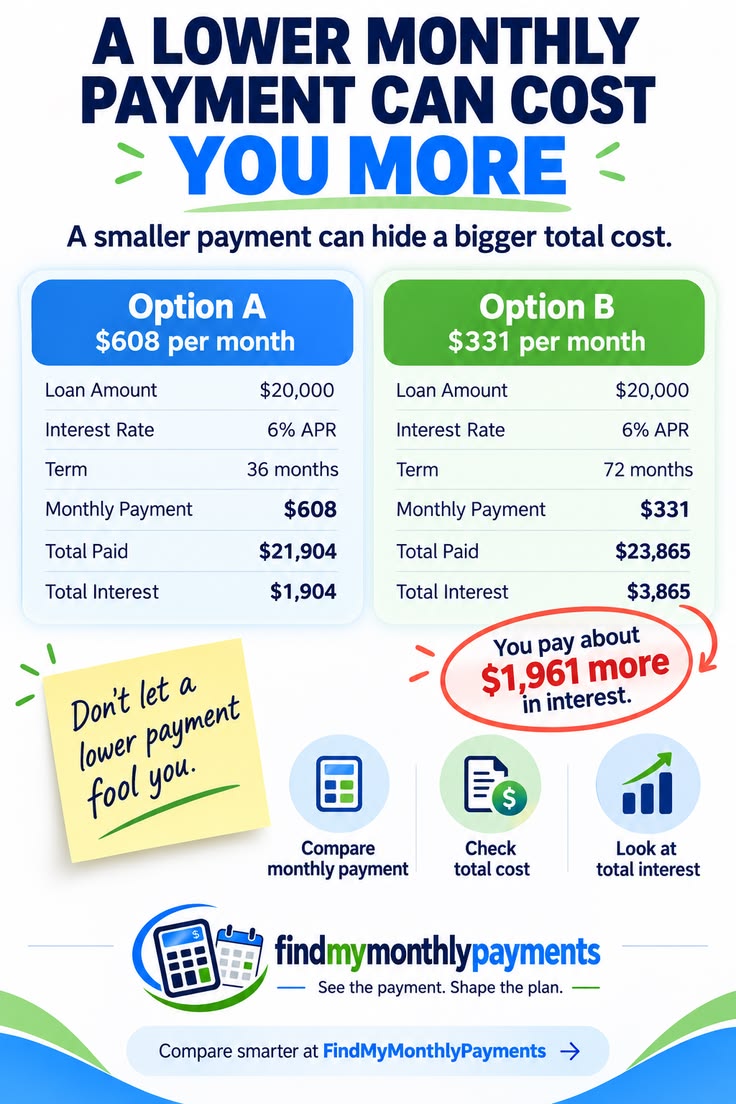
Because private student loans are commercial contracts ineligible for federal IDR or government deferments, the primary way to lower private loan bills is refinancing into a 15- or 20-year term. While this increases lifetime interest costs, it immediately shrinks the required monthly draft.
6. Frequently Asked Questions (FAQ)
How fast does an IDR application take effect?
Submitting an IDR application online at StudentAid.gov takes approximately 10 to 15 minutes. Servicers generally process and implement the new payment within 30 to 45 days. You can request administrative forbearance while the application processes.
Does lowering my payment increase the total interest I will pay?
Yes. Unless you are enrolled in an IDR plan with interest subsidies or pursuing 100% tax-free loan forgiveness, stretching out payments keeps your principal balance elevated longer, which increases total lifetime interest paid.
Can I change repayment plans more than once?
Yes! Federal student loan borrowers have the legal statutory right to change their repayment plan as often as necessary based on life and income changes, completely free of charge.

Written by Marcus Vance, CFP®®
✓ Fact-Checked & ReviewedLead Financial Aid & Student Debt Strategist
Marcus Vance is a Certified Financial Planner (CFP®®) specializing in higher education financing, federal loan restructuring, and student loan repayment optimization. He has analyzed hundreds of student debt portfolios to help graduates minimize interest and achieve debt freedom.