How to Compare Student Loan Repayment Costs: Master Evaluation Matrix (2026)
📌 Key Takeaways & Executive Summary
- Plan Trade-Off Dynamics: Repayment plans exist on a spectrum balancing low monthly payments against total lifetime interest costs.
- The Standard 10-Year Benchmark: Delivers the lowest lifetime interest cost among non-forgiveness options by amortizing over exactly 120 payments.
- Income-Driven Optimization: For public servants pursuing PSLF, IDR plans deliver the lowest out-of-pocket cost through tax-free forgiveness.
- The Multi-Factor Formula: Evaluate plans based on monthly cash flow impact, cumulative interest, forgiveness eligibility, and tax consequences.
The U.S. Department of Education offers a dizzying array of repayment plans: Standard, Graduated, Extended, SAVE, PAYE, and IBR. Choosing the wrong plan can easily cost you an extra $20,000 to $40,000 in unnecessary interest or forfeit tens of thousands in statutory loan forgiveness.
To choose the optimal path, you must compare repayment plans across multiple dimensions: required monthly cash flow, cumulative lifetime interest, loan forgiveness eligibility, and future tax obligations. In this guide, we provide a master evaluation framework to compare repayment costs accurately.
1. Master Comparison Matrix: $45,000 Balance at 6.5% APR
Review this side-by-side comparison of a borrower with $45,000 in federal undergraduate student loans and an Adjusted Gross Income (AGI) of $55,000:
| Repayment Plan | Initial Monthly Bill | Repayment Term | Total Interest Paid | Best Match For |
|---|---|---|---|---|
| Standard 10-Year | $510.97 | 10 Years (120 Mos) | $16,316.40 | Private sector earners wanting rapid payoff and minimal interest. |
| Graduated 10-Year | $290.45 (Steps up) | 10 Years (120 Mos) | $20,480.00 | Borrowers expecting predictable, rapid salary growth within 24 months. |
| Extended Fixed 25-Year | $303.84 | 25 Years (300 Mos) | $46,152.00 | High debt balances needing cash flow relief who do not qualify for IDR. |
| SAVE Plan (Undergrad 5%) | $87.98 / month | 20 Years (Forgiveness) | Subsidized by Gov. | Borrowers seeking lowest monthly payment & PSLF forgiveness! |
2. The 3 Core Evaluation Rules
Rule 1: If You Qualify for PSLF, Choose SAVE or PAYE Immediately
If you work full-time for a government entity or 501(c)(3) non-profit, your goal is to minimize total dollars paid over 120 months. Enrolling in the SAVE plan produces the lowest monthly payment, allowing the federal government to wipe out the remaining balance tax-free after 10 years.
Rule 2: If You Earn a High Corporate Income, Stick to Standard Repayment
If your salary is high relative to your debt (e.g. earning $90,000 with $35,000 in loans), IDR plans will calculate a monthly payment that exceeds the Standard 10-Year amount. The Standard 10-Year plan guarantees the lowest lifetime interest expense.
Rule 3: Beware the Extended Plan Lifetime Cost
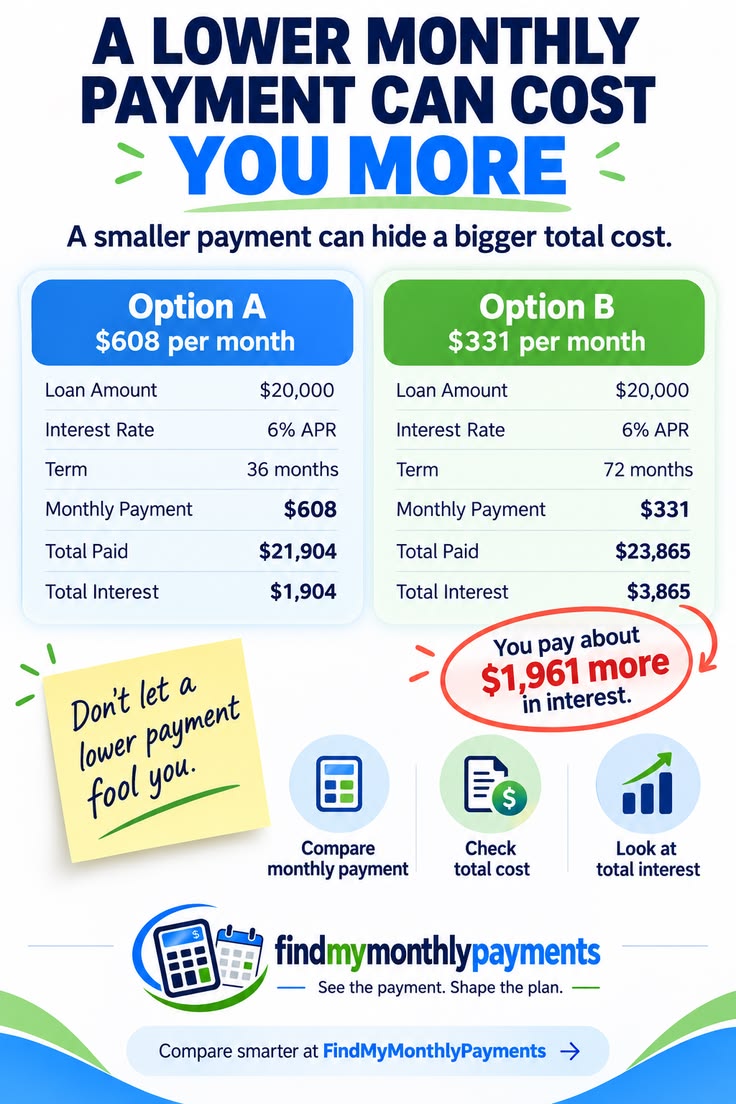
Never enroll in a 25-year Extended plan under the impression that you are saving money. As demonstrated in our comparison table, extending terms on a $45,000 balance nearly triples your lifetime interest expense from $16,316 up to $46,152!
3. Frequently Asked Questions (FAQ)
How do I switch repayment plans?
Log in to StudentAid.gov using your FSA ID and access the 'Loan Simulator'. You can compare all available plans based on your actual loan records and submit an electronic plan change request in under 10 minutes for free.
Does switching repayment plans capitalize my unpaid interest?
Under updated Department of Education regulations, interest capitalization has been eliminated when switching between the majority of federal repayment plans. However, leaving the IBR plan to standard repayment still requires interest capitalization by federal statute.
Can I make extra payments while on the Graduated Plan?
Yes! You can make voluntary extra principal payments on any federal repayment plan at any time without fees or penalties.

Written by Marcus Vance, CFP®®
✓ Fact-Checked & ReviewedLead Financial Aid & Student Debt Strategist
Marcus Vance is a Certified Financial Planner (CFP®®) specializing in higher education financing, federal loan restructuring, and student loan repayment optimization. He has analyzed hundreds of student debt portfolios to help graduates minimize interest and achieve debt freedom.